No Sign, No Reservation, No Problem: How to Find NYC's Most Secretive Dining Experiences
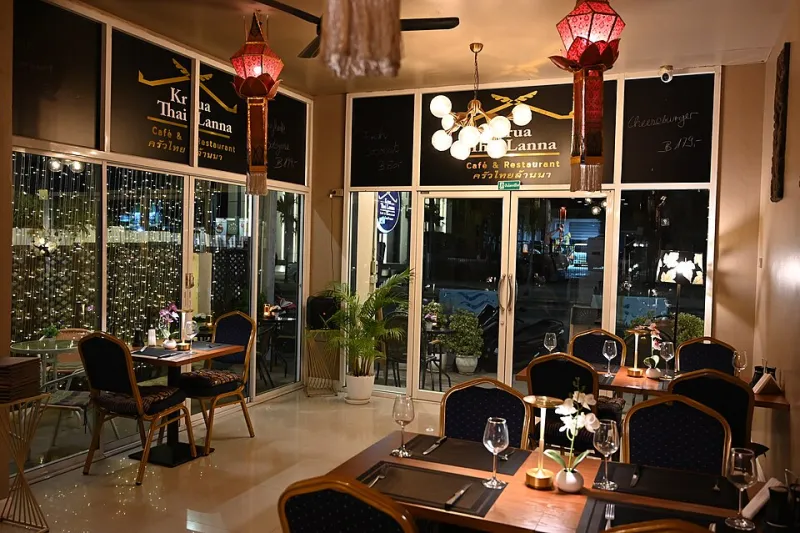
Photo: PattayaPatrol, CC BY-SA 4.0, via Wikimedia Commons
The text message arrives on a Tuesday afternoon with no context: Saturday. 7pm. Bring $80 cash and don't be late. More details when you confirm.
No restaurant name. No Yelp link. No tagged location on Instagram. Just a thread from a friend of a friend who mentioned, months ago, that she sometimes got invited to "these dinners."
This is how you get in.
The Anti-Restaurant Moment
New York's dining scene has never been louder. Every week brings another splashy opening in some freshly rebranded corner of downtown, another celebrity chef collaboration, another tasting menu that requires a nonrefundable deposit and a three-week lead time just to secure a spot. The noise is constant, and the signal — actual, memorable food in a genuine setting — can be hard to find underneath it.
Which is maybe exactly why the underground scene is thriving right now. Not in spite of the oversaturation, but because of it.
"People are exhausted by the performance of dining," says a chef who runs a biweekly supper club out of a Chinatown loft and asked to be identified only as T. "The Instagram moment, the tasting notes printed on the menu, the server explaining the 'concept' before you've even sat down. At some point that stops being hospitality and starts being theater. What we do is just... cooking for people. Real people, in a real space, with real food."
T. has been running his operation for about three years. It started as a pandemic-era experiment — cooking for small groups when restaurants were closed — and never really stopped. He estimates he hosts twenty to thirty guests every other Saturday, charging a flat fee that covers food, wine, and a few hours of something that feels genuinely hard to name. Dinner party is too casual. Restaurant is too formal. It exists in the space between.
How These Things Actually Work
The mechanics of underground dining in New York vary widely, but a few patterns hold. Most operate on a word-of-mouth referral system that functions less like a velvet rope and more like a neighborhood recommendation — you know someone, they vouch for you, you get added to a list or a group chat or a Signal thread depending on how cautious the operator is.
Some are chef-driven, like T.'s loft dinners, where a single cook builds a menu around whatever's interesting to them that week. Others are collective efforts — a rotating cast of cooks who each take a night, using a shared space in Bushwick or a borrowed commercial kitchen in the Slope. A few operate out of actual storefronts that, during the day, are something else entirely: a natural wine shop, a flower studio, a clothing boutique that clears its racks on Friday nights and sets up tables.
Payment is almost always cash. Advance notice is almost always required. And the unspoken agreement — understood by everyone who gets invited — is that you don't post the address, you don't tag the location, and you definitely don't write about it in a way that would let anyone with a Google alert find it.
(We're honoring that last part here. Names of specific locations and identifying operational details have been kept deliberately vague at the request of the people we spoke with.)
The Anonymity Is the Point
It would be easy to read the secrecy as pretension — another layer of exclusivity in a city that already has plenty. But spend time talking to the people who run these operations and a different picture emerges. The anonymity isn't about being cool. It's about survival.
New York's health code, liquor licensing laws, and zoning regulations make operating a legitimate restaurant one of the more legally complex and financially brutal small business endeavors a person can undertake. Underground dining sidesteps most of that — not always cleanly, but practically. A chef hosting a private dinner party in their home is operating in a very different legal grey zone than a chef running an unlicensed restaurant. Most operators are acutely aware of where that line is and stay just behind it.
There's also the matter of creative freedom. "I've worked in restaurants where I had to make the same dish every night for two years because it was on the menu and people expected it," says a cook — mid-thirties, trained in France, currently working a day job in a hotel kitchen and running underground dinners on weekends — who goes by Dani. "Here I can make something I've never made before and if it doesn't work, we all just laugh about it. That's not possible in a real restaurant. The financial pressure makes it impossible."
Dani's dinners, held in a Carroll Gardens apartment she shares with two roommates who serve as de facto front-of-house, have developed a following that she describes as "maybe 200 people who rotate through." The menu is different every time. The vibe — her word — is "like if your most interesting friend learned to cook in Lyon."
First-Hand: What It's Actually Like
I attended one of these dinners in late winter — a six-course meal hosted in a Canal Street space I'd been told was a textile showroom by day. Twelve guests, two long tables pushed together, candles in wine bottles, and a sound system playing something between jazz and something I couldn't identify.
The food was serious without being precious: a crudo that tasted like it had been thought about for weeks, a slow-braised short rib that arrived without ceremony and disappeared fast, a dessert involving kumquats and something fermented that I still think about. The wine was natural, mostly orange, and poured generously by the person who made it — a winemaker from the Finger Lakes who'd driven down specifically for the evening.
Conversation moved freely between tables. By the third course, I'd learned that the woman next to me was an architect who'd been coming to these dinners for two years, that the man across from me ran a small press out of Red Hook, and that nobody at the table had met more than two other people before sitting down. By the end of the night, it felt like we'd all known each other for years.
That's the thing about these experiences that's genuinely hard to replicate in a conventional restaurant setting: the container shapes the content. When you're eating in a space that isn't designed to be a restaurant, with a group that wasn't assembled by a reservations algorithm, something different happens socially. The meal becomes the thing you're doing together rather than the backdrop to whatever else you came to talk about.
The Question Nobody Wants to Answer
The obvious tension in all of this is access. Who gets invited? Who doesn't? And does the word-of-mouth model just end up replicating the same social networks that already dominate the more traditional parts of the dining world — predominantly white, predominantly affluent, predominantly plugged into certain creative industries?
It's a fair criticism, and the operators I spoke with didn't fully deflect it. "I try to be intentional about who I invite and who I ask to invite people," T. says. "But I'm not going to pretend it's a perfectly democratic system. It's not. It's a dinner party. Dinner parties have always been political."
What the underground scene does offer, at its best, is something the conventional restaurant world increasingly can't: the feeling that you're somewhere real, eating food made by someone who actually cares, surrounded by people who aren't just there to say they went. In a city that's gotten very good at selling the appearance of authenticity, that's not nothing.
Sometimes it's everything.