Priced Out and Moving On: Where Downtown's Young Creatives Are Landing Next

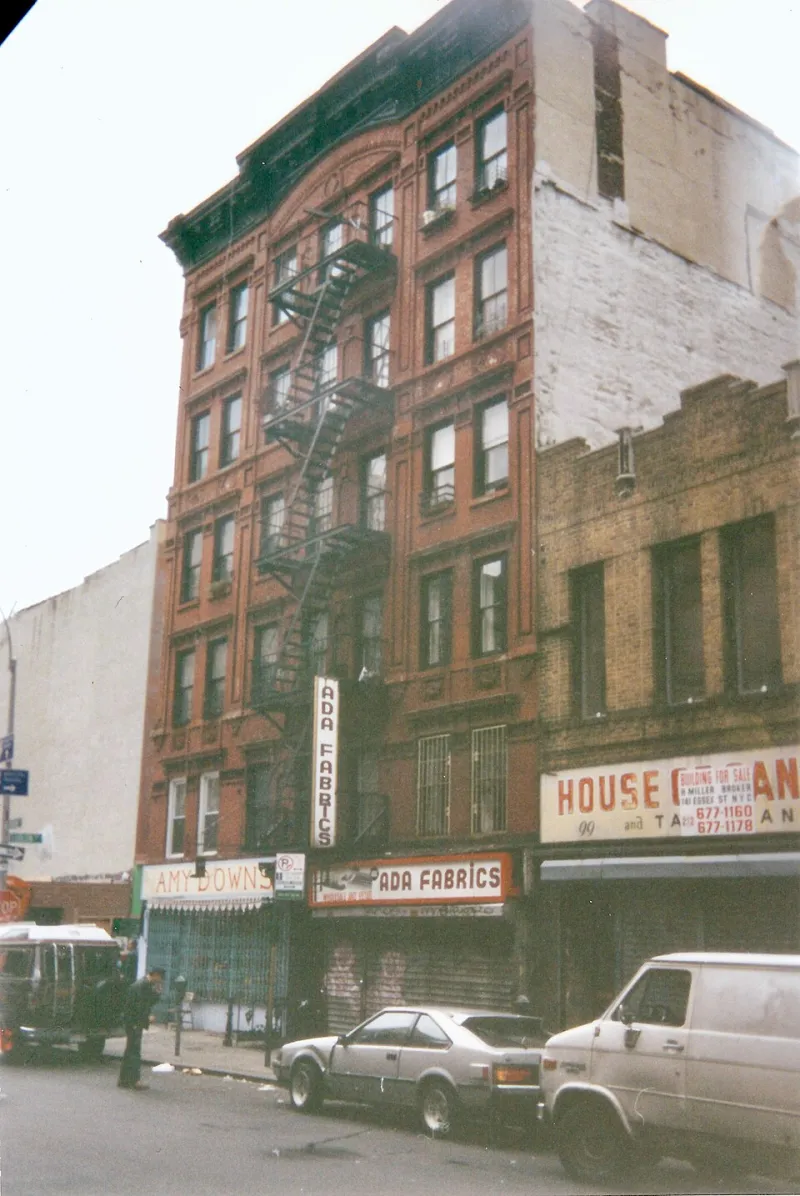
Photo: Internet Archive Book Images, No restrictions, via Wikimedia Commons
There's a particular kind of grief that hits when you realize a neighborhood has stopped being yours. Not in a legal sense — nobody's changing the locks — but in that gut-level way where you walk down a block you used to love and feel like a tourist in your own life. For a growing number of young New Yorkers, that feeling is becoming synonymous with the Lower East Side.
The math isn't complicated. Median one-bedroom rents in the LES have crept past $3,400 a month in many pockets, according to recent StreetEasy data. That's not a neighborhood for artists anymore. That's a neighborhood for people who aestheticize artists. And the young creatives, musicians, chefs, and general downtown weirdos who gave the LES its texture? They're packing boxes and pointing their U-Hauls at places most Manhattan-centric New Yorkers have barely considered.
The Numbers Behind the Exodus
It's not just vibes — there's real movement happening. Census data and rental trend reports from the past two years show a measurable uptick in 22-to-34-year-old renters landing in Ridgewood, Queens; Sunset Park, Brooklyn; and pockets of Astoria that haven't yet been colonized by rooftop bars named after dead poets.
Ridgewood, straddling the Queens-Brooklyn border, has seen a roughly 18 percent increase in new lease signings among renters under 35 since 2022. Sunset Park — long anchored by its Chinese and Latin American communities — is attracting a younger creative class drawn to its working-waterfront energy and rents that still, barely, clock in under $2,500 for a decent-sized one-bedroom. Astoria, forever the bridesmaid of Queens neighborhoods, is having a legitimate moment, with new gallery spaces, natural wine spots, and record stores popping up along Steinway and Ditmars corridors.
"I paid $1,850 for a two-bedroom in Ridgewood last year," says Marco, a 26-year-old graphic designer who relocated from Orchard Street after his landlord doubled his rent at lease renewal. "My old apartment is now listed as a 'luxury micro-unit.' I can't even be mad. I just had to leave."
What These Neighborhoods Are Gaining
The cultural transfer isn't just economic — it's generative. When creative people move somewhere, they build things. They open studios in empty storefronts. They start dinner parties that turn into supper clubs. They throw warehouse shows and start zines and do all the messy, low-margin stuff that eventually becomes the identity of a place.
Sunset Park is a particularly interesting case study. The neighborhood has long had a vibrant cultural life rooted in its immigrant communities — think the dense commercial corridors of Eighth Avenue or the taquerias and cumbia spilling out of restaurants on Fifth. What's changing now is the layering happening on top of that foundation. New residents aren't bulldozing what's there; they're, at least for now, building alongside it. A ceramics collective shares a building with a Cantonese bakery that's been there for forty years. A DIY venue books local punk bands three nights a week in a basement that also stores restaurant equipment.
Ridgewood has a similar energy — scrappier, more Queens about it. The neighborhood's older Polish and Latino communities coexist with an influx of young renters who came for the price point and stayed for the actual community feel. There are mutual aid networks, block associations with real teeth, and a local bar scene that still feels like it belongs to people who live there rather than people who are visiting from somewhere better.
What the LES Is Losing
Here's the uncomfortable part: the Lower East Side doesn't just lose bodies when these people leave. It loses function.
The LES built its reputation over decades as a place where things happened first — where the next sound, the next restaurant concept, the next wave of visual art emerged from proximity and economic necessity. That creative friction required a certain kind of density: broke people with ideas, living close together, with enough time and not enough money to do something interesting with both.
That density is gone now, or going. What replaces it is a neighborhood that looks creative — the murals are still there, the vintage shops have better Instagram presences than ever — but functions more like a museum of a subculture than an active participant in one. The cocktail bars that reference the neighborhood's immigrant history in their menu copy while charging $22 a drink are not a continuation of that history. They're a eulogy dressed up as a celebration.
Long-time residents and business owners feel it acutely. "You used to be able to tell who actually lived here," says one woman who's run a small alterations shop on Essex for over twenty years and asked not to be named. "Now everybody's just passing through. It's like a theme park."
Can Downtown Survive Its Own Success?
That's the question the LES has been failing to answer for the better part of a decade. Gentrification isn't new here — the neighborhood has been through multiple waves of it — but the current iteration feels different in its totality. Previous waves displaced communities while still leaving room for something to grow in the cracks. This one feels more like a full-coverage seal.
Some people are betting on the neighborhoods absorbing the exodus to eventually face the same fate. Ridgewood, they'll tell you, is three years behind the LES on the gentrification timeline. Sunset Park is five. Maybe. Probably. The forces that reshape neighborhoods in New York don't tend to stop at borough borders.
But right now, in 2025, those places still have something the LES has largely lost: the feeling that you could actually do something there. That the neighborhood is still being written rather than already archived.
And for a 24-year-old with a laptop, a side hustle, and an idea they haven't figured out how to execute yet, that feeling is worth a 45-minute commute on the M train.