Follow Your Nose: The Scent of a Changing Block Tells You Everything
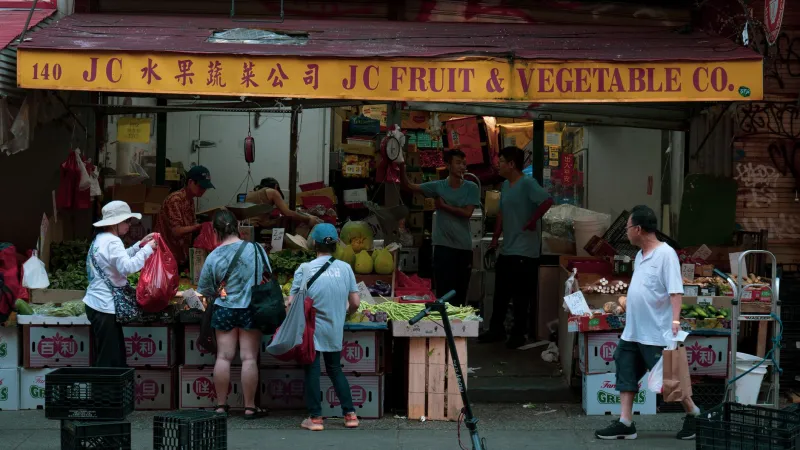
There's a particular smell to Orchard Street on a Sunday morning — fish brine and cardboard, the ghost of a garment district that never fully left, coffee burning somewhere in the back of a bodega that's been there longer than most of its customers have been alive. It's not pretty. It's not supposed to be. It's real, and for a long time, it meant you were home.
That smell is disappearing. And if you want to understand where downtown is heading, your nose might be the most honest instrument you've got.
The Candle Store as Harbinger
Sometime in the last five years, a new kind of retail started showing up on blocks that used to smell like exhaust and frying oil. You know the type: white walls, minimalist shelving, small-batch soy candles with names like Driftwood and Vetiver No. 3. The kind of place where you spend $48 on something that smells like a spa in a city that doesn't have spas.
These shops aren't random. They're almost algorithmic. Where one opens, a kombucha bar follows. Then a concept salon. Then a broker's open house.
Long-term residents on the Lower East Side have been tracking this pattern for years — not with spreadsheets, but with their senses. "When I started smelling lavender on my walk to the train, I knew," says one woman who's rented on Ludlow for over two decades. "It sounds insane, but I knew. Within a year, three of my neighbors were gone."
It doesn't sound insane at all. It sounds like pattern recognition earned through lived experience.
What We Lose When the Fish Markets Go
For generations, the Essex Street Market and the vendors who orbited it gave the LES a specific, unmistakable identity. The smell of fresh fish, of pickled things in barrels, of fruit going soft at the edges of the day — these weren't nuisances. They were signals that this was a neighborhood where people actually cooked, actually lived, actually needed things beyond aesthetics.
Fish markets are almost entirely gone from the downtown streetscape now. The ones that remain are fighting for their leases like everyone else. What replaced them? Juice bars. Artisan cheese counters. A rotating cast of pop-ups that smell faintly of eucalyptus and new construction.
This isn't just nostalgia talking. The disappearance of working-class food retail — the kind that smells like actual food — is one of the most concrete, quantifiable signs of neighborhood economic shift. When the smells get cleaner, the rents get higher. It's not a metaphor. It's a market signal.
Developers Know This Too
Here's the part that should make you uncomfortable: the real estate industry figured out the scent-displacement connection a long time ago.
Property management companies have been quietly investing in what the industry calls "ambient scenting" — pumping carefully selected fragrances through the HVAC systems of lobbies, common areas, and newly renovated hallways. The goal is to make prospective tenants feel like they're somewhere elevated. Somewhere worth the price point.
This is not a conspiracy theory. It's a documented hospitality industry practice that migrated into residential real estate sometime around 2015. Luxury buildings in Tribeca and the Financial District have been doing it openly. The logic is simple: if a place smells expensive, people believe it is.
The downstream effect on surrounding blocks is less documented but equally real. When a new development opens and its lobby smells like cedar and white tea, the deli next door — which smells like it should, like sandwiches and floor cleaner and decades of neighborhood traffic — starts to feel, by contrast, like a problem to be solved.
The Smell of Construction Is Its Own Language
Anyone who grew up downtown knows the smell of a building going up: wet concrete, sawdust, the particular metallic bite of new plumbing going in. For a long time, that smell was neutral — buildings went up, buildings came down, the neighborhood metabolized change the way cities do.
Now it reads differently. When you catch that smell on a block that was stable for years, it triggers something closer to dread than anticipation. The construction smell means someone bought something. And when someone buys something downtown right now, they're not buying it to keep it the same.
There's also the smell of a vacant storefront, which has its own distinct character — dust, old wood, the faint chemical tang of a lease that expired and wasn't renewed. Walk down certain stretches of Delancey or Allen and you can smell the economic anxiety in real time. Vacancy has a scent. It smells like waiting.
What Longtime Residents Actually Notice
We talked to a handful of people who've lived in the same downtown apartments for ten, fifteen, twenty-plus years. The question was simple: when did you first know your block was changing? Almost none of them mentioned rent increases or new storefronts as the first sign. They mentioned smell.
One man who's been on Clinton Street for eighteen years said he noticed it when a nail salon was replaced by a skincare studio. "The nail salon had a chemical smell, acetone, whatever. I walked past it every day and I didn't think about it. When it closed and the new place opened, it smelled like cucumber water and I thought — that's not for me. That was the moment I understood."
Another resident, a woman who moved to the neighborhood from the Dominican Republic in the nineties, put it simply: "When I can't smell food from the street anymore, I know the people who cook are gone."
Reclaiming the Right to Smell Like Somewhere Real
There's a growing resistance to the aestheticization of urban space — and scent is quietly becoming part of that conversation. Community-supported markets, mutual aid food distributions, the handful of old-school vendors who've survived by sheer stubbornness: they all carry with them a specific, honest smell that functions as a kind of territorial claim. We are still here. This block still belongs to people who live in it.
The curated, sanitized scent profile of a gentrifying block is, at its core, an act of erasure dressed up as improvement. It's the olfactory equivalent of a fresh coat of paint on a building whose tenants are being pushed out through the back door.
Downtown has always been a place that smelled like itself — complicated, layered, occasionally unpleasant, entirely alive. The day it starts smelling like a hotel lobby is the day we have to ask who exactly this neighborhood is being built for.
Spoiler: it's not you.