Stuck in Place, On Purpose: Inside the Downtown Apartments That Refused to Move On
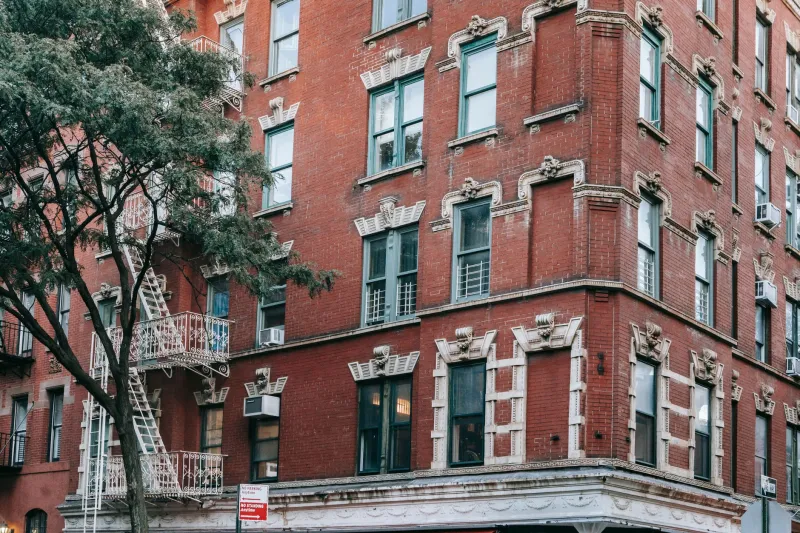
The building on Rivington doesn't advertise itself. There's no intercom panel with Bluetooth connectivity, no package locker bolted to the lobby wall, no QR code linking to a leasing portal. The buzzer still works the old way — you press a button, someone leans out a window, and they either throw down a key or they don't. That's how it's been since 1974. That's how it still is.
Upstairs, on the fourth floor, Elena R. has lived in the same two-bedroom for 41 years. She moved in when she was 29, newly separated, with a kid in a backpack and a few boxes of kitchen stuff. The rent was $312 a month. It's $748 now — still stabilized, still below anything resembling market rate, still hers. The linoleum in the kitchen is the same linoleum that was there when she signed the lease. The radiator knocks the same way it always has. The cabinet above the stove still sticks unless you lift and pull simultaneously.
"I know every sound this apartment makes," she says, not nostalgically, but the way a person describes knowing a language. Fluently. Without thinking.
The Furniture Didn't Move Either
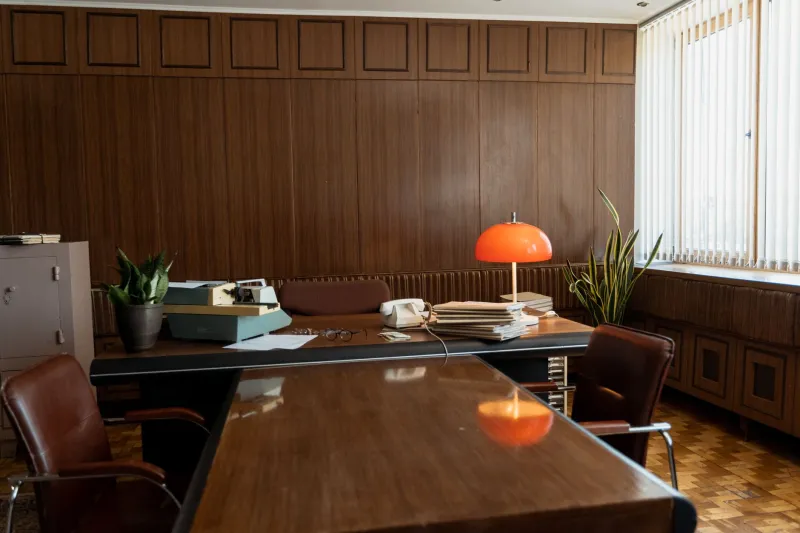
What strikes you first, walking into these apartments, isn't the age of anything. It's the coherence. Elena's living room has a couch she bought secondhand from a neighbor who was moving to Queens in 1989. A floor lamp with a yellowed shade that she keeps meaning to replace. A television set — not a flat screen — that sits on a wooden stand she found on the curb on Delancey during a summer trash walk. The walls have a particular shade of off-white that paint manufacturers stopped making sometime around the Clinton administration.
None of this is a design statement. That's the point.
In neighborhoods where every surface has become a potential mood board, where exposed brick gets described in rental listings like a personality trait, these apartments exist outside the aesthetic economy entirely. They weren't styled. They weren't preserved. They just kept going.
Two blocks away, in a building that shares a property tax lot with a condo conversion that sold units at $1.8 million, Darnell W. has a kitchen where the appliances are all white — not the trendy retro white of a renovated Williamsburg loft, but the actual white of appliances bought in 1983 and never replaced because they still work. His refrigerator hums. His stove has four burners and a pilot light you have to coax. He's cooked thousands of meals on it. He's not sentimental about any of this, either. "If it breaks, I'll deal with it," he says. "It hasn't broken."
What Gets Preserved Without Trying
There's a term archivists use — passive preservation — for the way things survive not because anyone protected them but because no one got around to throwing them out. These apartments are that, applied to an entire way of living.
Elena still has a rotary phone in her hallway. She doesn't use it — the line was disconnected years ago — but it was there when she moved in and she never saw a reason to move it. On the shelf above it, there's a phone book from 2003, a TV Guide from 1997, and a small framed photo of her daughter at age seven, which means her daughter is now 48 and lives in the Bronx and calls every Sunday.
Darnell has a shelf of VHS tapes he hasn't watched in fifteen years but also hasn't gotten rid of. "Where would they go?" he asks, which is both a practical question and a philosophical one.
What these spaces hold isn't clutter. It's continuity. The sediment of a life that didn't get interrupted by a lease termination or a buyout offer or a gut renovation. Every object in these rooms was chosen or kept by the same person who still lives there, which means the apartment is, in the most literal sense, a self-portrait — layered, contradictory, accumulated over decades.
The Neighborhood Moved. They Didn't.
Both Elena and Darnell have watched the Lower East Side change so many times that the changes stopped surprising them. The Puerto Rican social club that was on their block became a bar, then a restaurant, then a different restaurant, then a gallery that lasted eight months, then a restaurant again. The hardware store is gone. The pharmacy that filled prescriptions for the whole block is gone. The check-cashing place is gone, replaced by a juice spot that closed during COVID and became a real estate office.
"The neighborhood looks like it's for someone else now," Elena says. "But my apartment still looks like mine."
This is not a small thing. In a city that treats displacement as an inevitability, the ability to remain — physically, materially, temporally — is a form of resistance even when it isn't performed as one. Elena didn't keep her linoleum to make a point. She kept it because it's fine and she had other things to worry about. But the effect is the same: a piece of the old city, intact, inhabited, alive.
The Unofficial Archive
Historians and preservationists spend enormous resources trying to document what New York looked like before each successive wave of capital reshaped it. They collect photographs, oral histories, building surveys. They digitize menus and matchbooks and corner store receipts.
Elena and Darnell are doing something those efforts can't replicate. They're not documenting the past. They're living inside it, continuously, in real time. Their apartments aren't museums because museums imply distance — a velvet rope, a placard, a gift shop. These are working homes. The couch gets sat on. The stove gets used. The radiator knocks every November when the heat kicks on for the first time and Elena bangs it twice with the heel of her hand, the way she learned to do in 1986.
The knowledge embedded in that gesture — the specific physics of that particular radiator, the exact force required, the timing — exists nowhere else. It's not written down. It's not archived. It lives in her body and in that apartment and in the continuous thread connecting 1983 to right now.
When that thread breaks — when the lease ends, when the tenant dies, when the landlord finally gets the vacancy they've been engineering for years — it doesn't just break. It disappears. The renovation crew comes in, the linoleum goes, the walls get a coat of something called "Agreeable Gray," and the listing goes up the following week.
The building on Rivington still has the old buzzer. For now.