Before the Condos Come, the Cables Do: What Your Block's Internet Speed Is Really Telling You
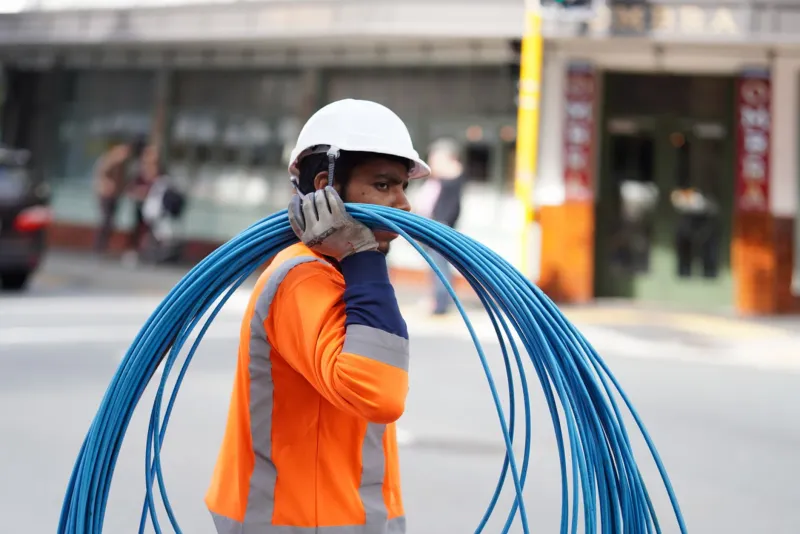
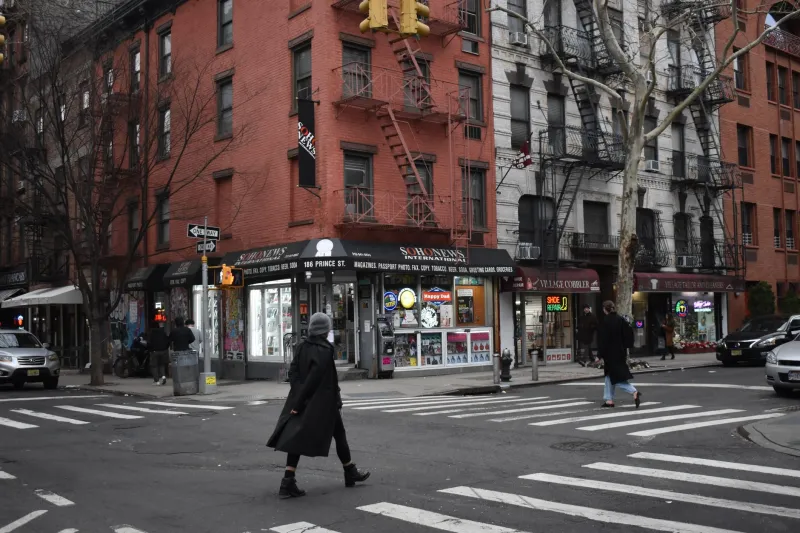
Notice anything different about that stretch of Delancey lately? Maybe it was the Verizon crew digging up the sidewalk for what felt like three weeks straight. Maybe it was the new cell booster mounted on a building you've walked past a hundred times without thinking twice. Maybe you just pulled up Speedtest one morning and realized your apartment — the one you've been fighting your landlord over for six years — suddenly had gigabit download speeds.
Congratulations. Your block might be getting gentrified, and the broadband got there first.
The Infrastructure Nobody Talks About
When people track neighborhood change downtown, they tend to fixate on the obvious stuff: the third coffee shop with exposed Edison bulbs, the juice bar where the laundromat used to be, the listing on StreetEasy that made you spit out your bodega coffee. But urban planners and a growing number of tenant advocates say those visible markers are late-stage signals — the transformation has already been decided by the time the brunch spots start arriving.
What comes earlier, quietly and without much fanfare, is infrastructure. Specifically, broadband infrastructure.
"Fiber optic deployment maps and gentrification maps overlap in ways that are not coincidental," says one urban planning researcher who asked not to be named because they consult for the city. "Telecom companies are not neutral actors. They're making investment decisions based on projected income demographics. They're essentially betting on which neighborhoods are going to get wealthier."
That's not a conspiracy theory — it's a documented phenomenon called "digital redlining," and its inverse is just as real. If your block is getting wired up with the good stuff, someone with a spreadsheet has already decided it's worth investing in.
What the Numbers Actually Show
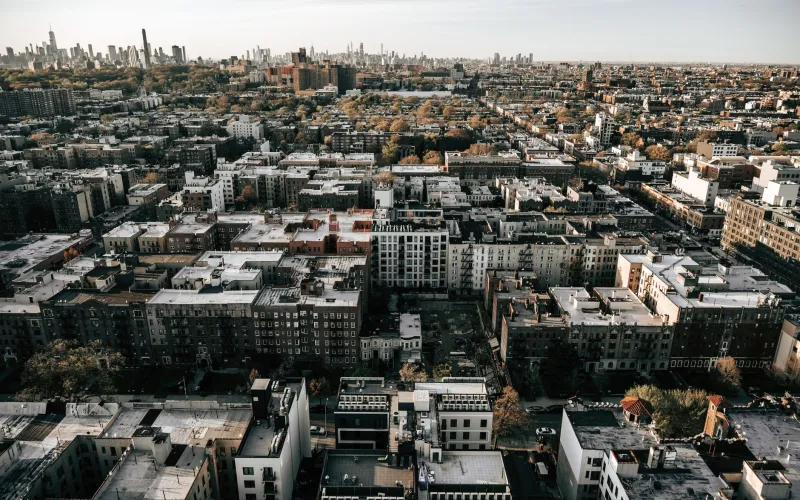
Pull up any broadband availability map layered over NYC census data and the pattern is uncomfortable to look at. The Lower East Side — historically one of the most densely populated, lower-income neighborhoods in Manhattan — has seen measurable spikes in high-speed internet availability in the same micro-zones where displacement pressure has spiked over the past decade.
Roxana Gutierrez, who has lived on the same block of Rivington Street for 22 years, didn't need a map to notice. "First the street got repaved. Then the lights got brighter — like, they actually upgraded the streetlights. Then suddenly there were two different companies knocking on doors offering fiber packages. I'd never been offered anything like that before. Six months later, three families on my floor got pushed out."
She's not drawing a direct causal line. But she's not wrong to connect the dots.
Broadband investment in urban neighborhoods tends to track with what the telecom industry calls "high-value customer potential" — a metric that is, in practice, a proxy for income. The FCC has documented persistent gaps in high-speed internet availability between lower-income and higher-income neighborhoods. What's less discussed is the flip side: when those gaps suddenly close in a previously underserved area, it often signals that the income projections for that area have changed.
The Tech Worker Effect
Ask anyone in the tech industry and they'll tell you: reliable, fast internet isn't a luxury anymore, it's a baseline requirement. Remote workers, freelancers, and the broader creative-tech class that has been colonizing downtown neighborhoods for the past fifteen years won't rent in a building with bad WiFi. Developers know this. Landlords know this. And increasingly, the telecom companies wiring those buildings know it too.
"When a developer comes in and does a gut renovation, one of the first calls they make is to get fiber pulled," says a contractor who has worked on residential conversions throughout the LES and Chinatown. "It's like plumbing now. You can't market a luxury unit without it. So the infrastructure gets upgraded before the first tenant even moves in."
This creates a feedback loop that's hard to break. Better broadband attracts higher-income renters. Higher-income renters justify higher rents. Higher rents push out the people who were already there. And the fiber lines stay long after those original residents are gone.
Connectivity as a Class Signal
There's something almost poetic — in the worst way — about the fact that one of the most class-coded technologies of our era is also one of the least visible. You can protest a luxury condo tower. You can organize against a landlord who's letting units go vacant to drive up prices. But you can't exactly rally against a cable being buried three feet underground.
And yet the cable is doing real work. It's part of the same logic that drives every other piece of neighborhood transformation: the idea that certain blocks need to be made legible, comfortable, and profitable for a different kind of resident.
Jamil Okafor, a community organizer who has worked in the Two Bridges area for nearly a decade, puts it plainly. "Infrastructure tells you who a neighborhood is being built for. When the city or a private company decides to upgrade something — a park, a subway station, broadband — that's a resource allocation decision. And resource allocation decisions are political. They tell you whose comfort and whose future somebody is prioritizing."
He points to blocks along the East Broadway corridor where broadband availability remains spotty, even as adjacent streets have been fully upgraded. "That's not an accident. That's a map of who matters."
What You Can Actually Do With This
So if fast internet is an early warning system, what do you do with that information?
For starters, pay attention. Tools like the FCC's broadband map and NYC's own open data portal let you track connectivity changes at the block level over time. Tenant organizers have started incorporating broadband data into their displacement risk assessments — treating it the same way they'd treat a spike in building sale activity or a sudden cluster of HPD violations.
There's also a policy argument worth making louder: public broadband infrastructure, funded and deployed by the city rather than by private telecoms chasing demographic projections, would theoretically decouple internet access from real estate speculation. NYC has flirted with this idea for years. It hasn't happened yet.
In the meantime, the cables keep going in. The speeds keep climbing. And somewhere in a developer's pro forma, a block that's been home to the same families for generations just got marked as ready.
You'll know it happened when your phone stops buffering.