Eighteen Months, One Block, Zero Warning: Inside the Fastest Flip Downtown Has Ever Seen
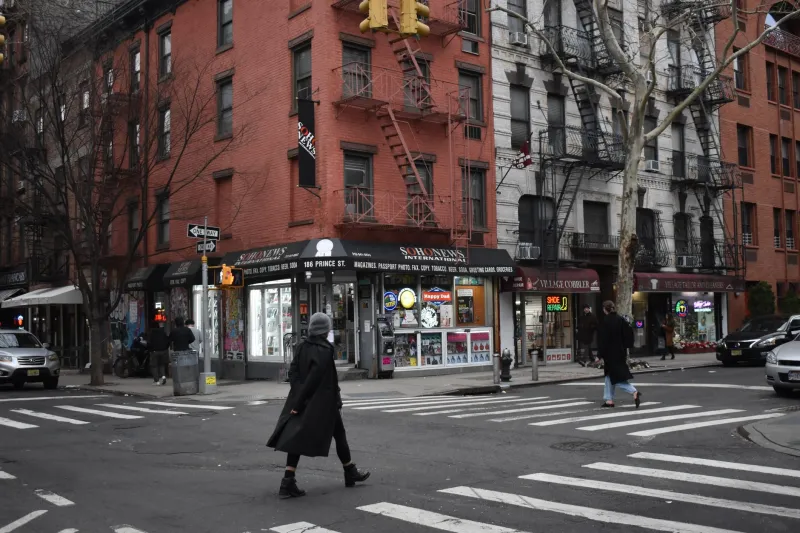
There's a block on the Lower East Side that, not long ago, most people couldn't have picked out on a map. A laundromat that doubled as a neighborhood message board. A Dominican lunch counter that didn't take cards and didn't need to. A shuttered hardware store with a hand-painted sign that nobody had updated since the nineties. It was unremarkable in the best possible way — the kind of block that existed for the people who lived there, not for anyone passing through.
Today, that same block has a natural wine bar, a ceramics studio that hosts ticketed workshops, two coffee concepts with exposed concrete and pendant lighting, and a boutique hotel that opened last spring to a write-up in a travel publication that described the neighborhood as "raw but rapidly refining." The laundromat is gone. The lunch counter is gone. The hardware store is now a skincare brand's first brick-and-mortar location.
It took eighteen months.
The Playbook Nobody Admits Exists
Rapid neighborhood transformation doesn't happen by accident. What looks like organic change — new businesses trickling in, old ones quietly folding — is almost always downstream of a specific set of financial decisions made well before any storefront changes hands.
"There's a moment when a block gets flagged," says one commercial real estate broker who asked not to be named. "Someone runs the numbers, looks at foot traffic projections, looks at what's happening two or three blocks over, and decides this is the next target. Once that happens, the landlords know. And once the landlords know, the leases start changing."
In this case, the signal came from a rezoning decision that added density to adjacent parcels. That brought construction. Construction brought temporary foot traffic. Temporary foot traffic attracted the first wave of hospitality investment. And once one well-capitalized operator signed a lease at above-market rate — effectively setting a new floor for what the block was "worth" — the dominoes were already falling.
Long-term tenants, many of them operating on month-to-month arrangements after years of informal landlord relationships, found themselves suddenly facing lease renewals with terms they couldn't meet. Some were offered buyouts. Others got notices. A few just stopped hearing back from their landlords entirely, which is its own kind of answer.
The People Who Stayed Long Enough to Watch It
Maria has lived in the same apartment above what used to be the lunch counter for twenty-two years. She watched her neighbor Esperanza run that counter for most of those years, watched the regulars come and go, watched the block absorb and reflect the community around it. She watched it all change in less time than it takes a kid to finish second grade.
"The first thing I noticed was the construction noise," she says. "Then the scaffolding. Then one morning I woke up and there were people outside taking pictures of the scaffolding like it was something beautiful. That's when I knew it was over."
She's not wrong that photography is often a leading indicator. The visual documentation of a neighborhood's "grit" — the peeling paint, the old signage, the texture of a place that hasn't been curated — tends to precede the cafes by about six months. The photographers come first. Then the content. Then the people who saw the content.
"By the time a neighborhood is on Instagram, it's already leaving," says one local historian who has spent years tracking displacement patterns across Manhattan's lower wards. "What gets photographed is always the last version of something, not the living version."
What the New Arrivals Think They're Getting
It would be easy — and a little lazy — to frame every new business owner as a villain. The reality is messier. Some of the people who opened on that block in the last eighteen months moved to the neighborhood years ago, watched it change around them, and seized an opportunity when it appeared. Others are transplants who genuinely believe they're contributing something. A few are purely transactional operators who will flip their lease the moment the numbers make sense.
Jordan, who opened the ceramics studio, falls somewhere in the middle. She's been in the city for seven years, lived in Brooklyn before landing downtown, and spent eight months finding a space she could afford. "I know what people think when they see a ceramics studio," she says, not unkindly. "I get it. But I also needed somewhere to work, and this was what I could make happen."
What Jordan couldn't fully see — or maybe chose not to examine too closely — was what had to leave for her to arrive. The hardware store that closed before she moved in had served the block's contractors, supers, and DIY tenants for decades. There's no equivalent nearby anymore. The people who needed it drive further or order online or just go without.
This is how cultural erasure works at hyperspeed: not through dramatic confrontation but through the slow accumulation of absences. The things that made a neighborhood functional for the people who actually lived there disappear quietly, replaced by things that serve an entirely different population.
Resistance Looks Different When There's No Time
In slower waves of gentrification, communities sometimes have enough runway to organize — tenant associations, business coalitions, political pressure campaigns. When transformation happens in eighteen months, that runway disappears.
"We didn't have time to react," says a member of a local tenant advocacy group who has been trying to support displaced residents on the block. "Usually you see the signs and you start working. Here, by the time we understood what was happening, half the businesses were already gone."
What resistance does look like, in this compressed timeline, is mostly documentation and mutual aid. Neighbors sharing information about tenant rights before lease renewals hit. Community members showing up to CB3 meetings with specific grievances about specific properties. A handful of remaining business owners quietly refusing above-market buyout offers because they're not ready to go.
Esperanza, who ran the lunch counter for eighteen years, took a buyout. She doesn't regret it exactly, but she's clear-eyed about what it meant. "They gave me enough to breathe for a little while," she says. "But they didn't give me enough to start over. That's the math they do. Just enough so you leave without making noise."
What Comes After the Instagram Phase
The block is undeniably busier now. On weekends, there's a line outside the coffee spot that does the lavender lattes. The hotel's rooftop hosts private events. The ceramics studio sold out its spring workshop series in forty-eight hours.
But the people who animated that block for two decades — who gave it the texture that made it worth photographing in the first place — are mostly gone. And the investors who engineered the transition have already started looking at the next block over.
The laundromat's old space is still empty, actually. It's been sitting vacant for four months with a broker's contact info taped to the window. Whatever comes next will be decided by whoever can pay for it.
Maria still lives upstairs. She's on a stabilized lease and she knows how to use it. Every morning she walks past the new storefronts and the people taking pictures of them, and she keeps walking.
"This was my neighborhood before it was their aesthetic," she says. "It'll be something else again after they leave. I'll still be here."
She says it without bitterness. Just fact.