Read the Fine Print: Downtown Tenants Are Turning Their Leases Into Weapons
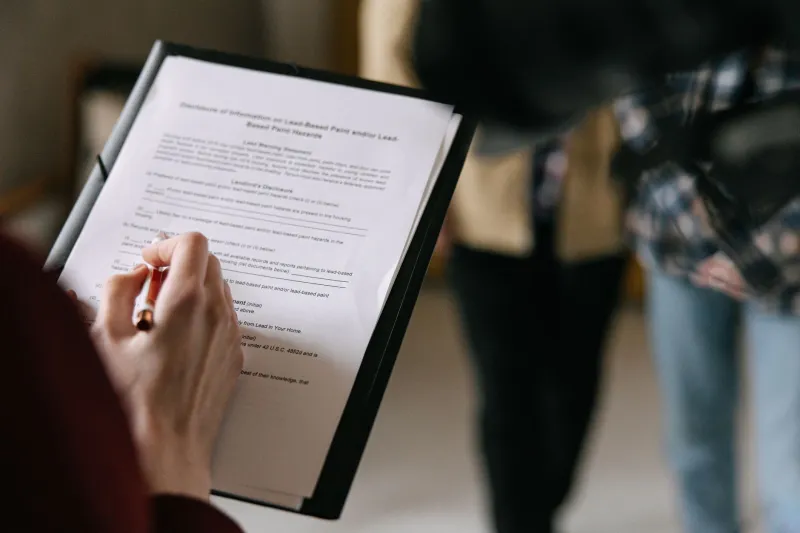
Maria Delgado has lived in the same rent-stabilized apartment on Rivington Street for nineteen years. When her building got absorbed into a larger real estate portfolio two summers ago, the first thing the new management company did was send her a lease renewal with a rent increase that didn't quite add up. The second thing they did was underestimate her.
"I had kept every single lease I'd ever signed," she says, sitting at her kitchen table with a thick manila folder in front of her. "Every one. Going back to 2005. And I knew something was off the second I read that renewal."
What was off — and what a tenant lawyer she found through a Legal Aid referral confirmed — was that the building had failed to properly register the apartment with the New York State Division of Housing and Community Renewal for a two-year stretch in the early 2010s. That administrative gap had legal consequences. Maria's rent, it turned out, had been miscalculated for years. She didn't just push back on the renewal. She got a rent reduction.
Her story isn't unique anymore. Across the Lower East Side and into the broader downtown corridor, a quiet but intensifying counter-movement is taking shape — one built not on rallies or social media campaigns, but on lease literacy.
The Paper Trail Is the Power
Tenant attorneys who work the downtown circuit say they've seen a meaningful shift in the last three to four years. Clients are coming in more prepared. They're asking sharper questions. They've done their homework.
"People used to come to me after they'd already signed something they shouldn't have," says Jonah Reyes, a housing attorney who operates out of a shared office space near Delancey. "Now I'm getting calls before the renewal even hits the mailbox. That's a different conversation entirely."
Reyes has built a specialty around what he calls "the archaeology of the lease" — digging through years of signed agreements, DHCR filings, and building registration records to find the inconsistencies that corporate landlords, for all their legal firepower, sometimes overlook. Preferential rent arrangements that were never properly documented. Vacancy decontrol procedures that weren't followed to the letter. Improvement increases that were calculated on work that was never actually completed — or that was completed but misclassified.
"These portfolios are massive," he explains. "When a private equity firm buys forty buildings at once, they're not doing deep dives on individual units. They're running spreadsheets. And spreadsheets miss things."
The Clause Nobody Talks About
For small business owners, the leverage points are different but no less potent. Commercial leases in New York are notoriously tenant-hostile on their face — but buried inside them are clauses that tenants rarely think to invoke until it's too late.
Personal guarantee limitations. Co-tenancy clauses tied to anchor businesses on the block. Force majeure language that got a lot more interesting after 2020. Landlord maintenance obligations that, when ignored long enough, can constitute a material breach of the agreement.
Danielle Okonkwo runs a natural hair care studio on a side street off Essex. When her landlord began what she describes as a slow-motion harassment campaign — delayed repairs, sudden inspections, ambiguous notices — she brought her lease to a small business attorney. What they found was a clause requiring the landlord to maintain the HVAC system in "good working order." The unit had been malfunctioning for eight months.
"My lawyer sent one letter," Okonkwo says. "One. And suddenly everything got fixed and the conversation about my renewal got a lot more respectful."
The threat of a breach-of-contract claim, her attorney explained, wasn't just about winning in court. It was about changing the power dynamic at the negotiating table.
Who's Teaching This Stuff
The knowledge doesn't spread by accident. Across the neighborhood, a loose but functional infrastructure has emerged for sharing this kind of information.
Tenant organizing groups have started hosting what some call "lease clinics" — informal workshops where residents bring their documents and lawyers volunteer a few hours to walk them through what they're actually sitting on. Community land trusts are building out resources. Legal nonprofits that used to focus almost exclusively on eviction defense are expanding upstream, helping tenants understand their rights before a crisis hits.
Social media has played a role too, though a more complicated one. There are private Facebook groups, Reddit threads, and Signal chats where downtown residents trade information about specific buildings, specific management companies, and specific legal strategies. The granularity can be remarkable — people sharing DHCR filing histories, tagging buildings where the registration lapsed, flagging landlords who've been found liable for overcharges in the past.
"It used to be that landlords had all the information and tenants had almost none," says Carmen Vásquez, a longtime community organizer who's been involved in tenant education efforts on the LES for over a decade. "That asymmetry is shrinking. Not gone. But shrinking."
The Other Side of the Table
Landlord consultants and real estate attorneys, to their credit, don't entirely dispute this. A few who agreed to speak — none willing to go on record — acknowledged that tenant sophistication has increased and that it's changed how some of their clients approach renewals.
"You can't lowball a renewal offer to someone who knows their rights the way you could ten years ago," one consultant said. "They'll call you on it. And if they have a good attorney, you might end up in a worse position than if you'd just been fair to begin with."
That's not a concession. It's a recalibration. The same consultant was clear that corporate landlords still hold structural advantages — in capital, in legal resources, in the sheer exhaustion that comes from fighting a protracted battle against a well-funded opponent. "Most tenants can't afford a long legal fight," he noted. "That hasn't changed."
True. But Maria Delgado didn't need a long legal fight. She needed a folder full of old leases and someone who knew what to look for.
What the Lease Is Actually Saying
The broader lesson, tenant attorneys say, isn't that every downtown resident is sitting on a legal goldmine. Most aren't. Most leases, when examined carefully, are exactly what they appear to be. But the act of reading them — really reading them, with attention and maybe a little help — is itself a form of resistance.
Because the lease is a document that both parties signed. It's a set of obligations that run in both directions. And in a city where so much of the displacement conversation centers on what tenants have lost, there's something quietly radical about insisting on what the contract actually says.
"The landlord has lawyers who read every word before they send it to you," Reyes says. "You should read every word before you sign it back."
Maria Delgado still lives on Rivington Street. Her folder is still on the kitchen table. She says she's already started a new one for next year's renewal.
"They're counting on you not paying attention," she says. "So I pay attention."