Your Block According to DoorDash: The Algorithm That Thinks It Knows Your Neighborhood Better Than You Do
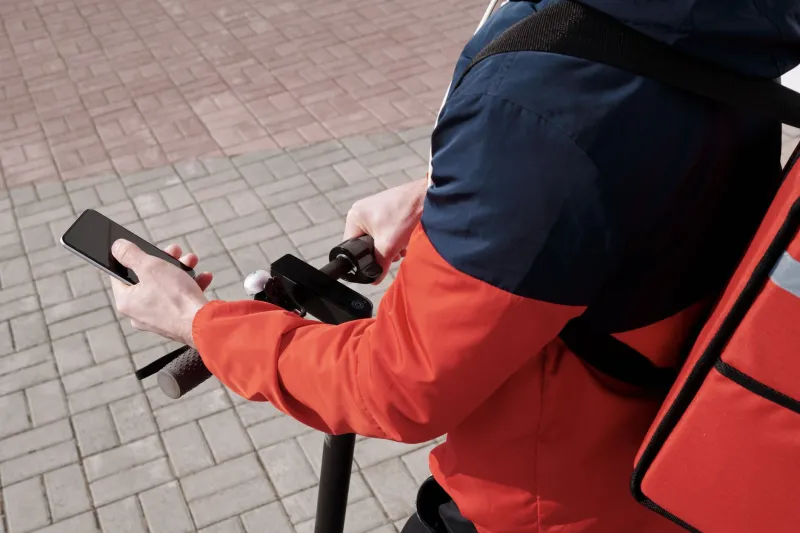
Open up any food delivery app right now. Go ahead. Type in your address somewhere between Delancey and Canal, or maybe over on Avenue B, and watch what the algorithm does with you. Maybe it slots you into the Lower East Side. Maybe it decides you're in Chinatown. Maybe — and this is the one that really stings — it just calls your block "Lower Manhattan" and calls it a day, lumping you in with the Financial District lunch crowd like you have anything in common with someone grabbing a grain bowl between conference calls on Fulton Street.
This is not a small thing. The way these platforms draw their invisible lines is actively reshaping how downtown residents navigate their own blocks.
Lines That Were Never There
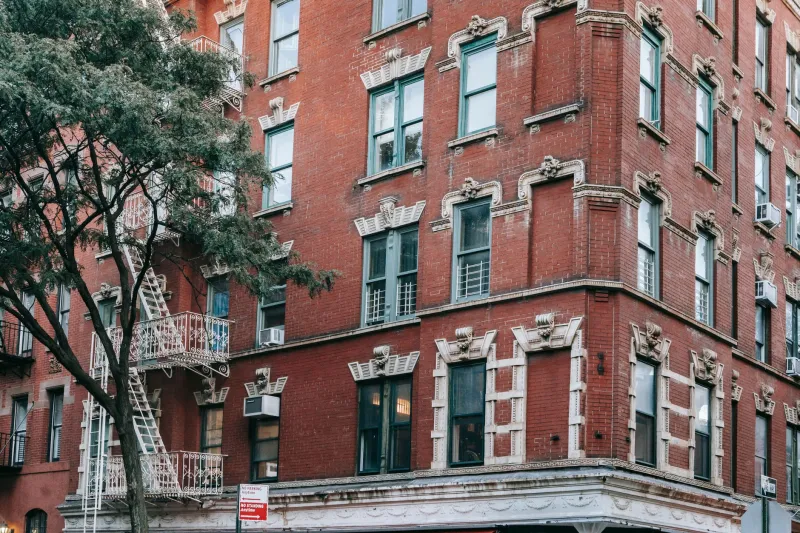
Neighborhood identity in New York has always been a negotiation. The LES bleeds into the East Village. Chinatown and Little Italy have been arguing over the same few blocks for decades. Nolita is basically SoHo with better PR. These are fluid, living boundaries, drawn and redrawn by the people who actually live and work within them — through culture, language, commerce, and time.
Delivery apps don't care about any of that. Their zones are built around logistics: driver density, restaurant clusters, projected order volume, and delivery time optimization. A polygon gets drawn somewhere in a product meeting, and suddenly your apartment is in a different "neighborhood" than the corner store you've been shopping at for six years.
Speak to enough people who live downtown and you start hearing the same frustration in different voices. A tenant on Eldridge Street who's been there since before the boutique hotels showed up describes opening Uber Eats one night and being told the Cantonese spot two blocks south — the one her family has ordered from for fifteen years — doesn't deliver to her address. The restaurant is in a different zone. The app has decided a boundary exists where none ever did.
The Restaurant Side of This Equation
For the businesses, it's even more complicated. Small restaurants on the edges of these algorithmic zones often find themselves cut off from customer bases they've served for years. A Fujianese place on East Broadway that built its loyal following from residents in the surrounding blocks might be invisible to someone six streets north simply because the app placed them in different delivery zones.
What's more, these platforms charge different commission rates and apply different promotional logic depending on the zone — meaning a restaurant's entire economic relationship with the app can shift based on where the algorithm decided to draw a line. Some owners have started maintaining multiple tablets running different apps just to hedge against the zoning inconsistencies, toggling between platforms depending on which one is actually reaching their actual neighborhood on any given night.
The overhead on that kind of patchwork solution is real, and it falls hardest on the smallest operations — the ones without the margin to absorb it.
What Gets Lost When the Map Lies
There's a subtler damage happening here too, and it's worth naming. When an app consistently routes you toward restaurants in one direction, you stop wandering in the other. Discovery — that fundamentally New York experience of stumbling into a place you didn't know existed — gets quietly replaced by whatever the algorithm surfaces based on your zone, your order history, and what the platform is currently incentivizing.
Downtown has always been a place where a single block could contain a Yemeni coffee spot, a Dominican lunch counter, a Vietnamese sandwich shop, and a third-wave espresso place that opened eight months ago and already has a line. That density, that friction, that collision of communities — it's not something an optimized delivery radius knows how to represent. The algorithm flattens it into a feed of sponsored results and promoted restaurants, most of which paid to be there.
Some longtime residents describe a creeping sense that the app's version of their neighborhood is starting to win. That younger arrivals — people who moved in during the pandemic or just after — are forming their entire mental map of downtown based on what the delivery interface shows them. Their "neighborhood" is whatever circle the app drew around their pin.
The Displacement Map Nobody Talks About
Here's the part that doesn't get enough attention: algorithmic zoning isn't neutral. When delivery platforms decide where one neighborhood ends and another begins, they're making choices that have real economic consequences — for restaurants, for workers, and eventually for the character of the blocks themselves.
If an app consistently treats a stretch of the LES as part of a broader "Lower Manhattan" zone, it starts routing customers toward the kinds of restaurants that dominate that broader category. Chains. High-volume operations with the infrastructure to play the platform game. The small family spot that's been feeding the block for twenty years doesn't have a dedicated account manager at DoorDash. It doesn't get a promotional push during slow hours. It just sits at the edge of a zone that was never designed with it in mind.
That's not an accident. It's what happens when the logic of optimization gets applied to a place that was never supposed to be optimized.
Finding Your Own Map
The counter-move, if there is one, is stubbornly analog. It's the people who still walk to pick up their food, who maintain actual relationships with the spots on their block, who know the owner's name and order without looking at a menu. It's the community boards and local business associations that push back when a new development or a new platform tries to rename their block for marketing purposes.
It's also, honestly, just going outside. The real map of downtown — the one that actually reflects who lives here, what they eat, and how these communities are connected — exists on the street, not in an app. No algorithm has figured out how to replicate the experience of walking past a kitchen vent on Mott Street at 7pm and following your nose.
The delivery apps will keep redrawing the lines. They'll keep deciding which version of your neighborhood is worth showing you. The question is whether the actual neighborhood — the one built over decades by the people who chose to stay — is going to let that version win.