Mural Money: How Real Estate Learned to Weaponize the Art It Once Painted Over
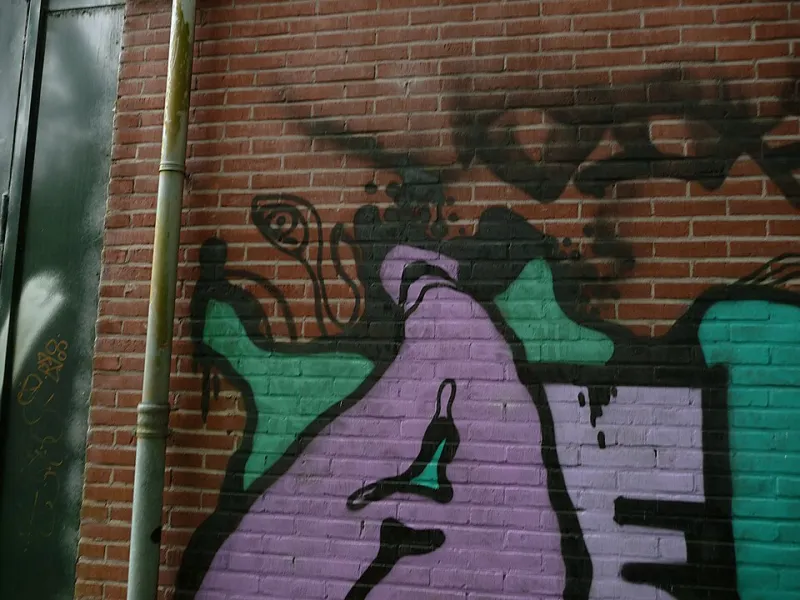
Photo: Fons Heijnsbroek from Amsterdam, Netherlands, CC0, via Wikimedia Commons
There's a building on Delancey that went up a few years back — glass-fronted, the kind of place with a rooftop deck and a concierge who knows your dog's name. Out front, covering nearly the entire ground-floor facade, is a massive mural. Vivid colors, intricate linework, the kind of piece that stops you on the sidewalk. It's genuinely beautiful. It also cost the developer exactly nothing in marketing spend, because the mural is the marketing.
This is the deal now. Street art — the form that grew out of poverty, protest, and the radical idea that public space belongs to everyone — has become one of the most effective rebranding tools in New York real estate. And downtown is ground zero for the transformation.
From Vandalism to Value-Add
The shift didn't happen overnight. Through the '70s and '80s, graffiti in New York was treated as a symptom of urban decay. The city spent millions buffing train cars. Artists got locked up. Entire careers were built on the premise that putting paint on a surface you didn't own was an act of defiance — because it was.
Then something changed. The art world started paying attention. Galleries on the Upper East Side were selling canvases by guys who'd learned their craft in subway tunnels. Jean-Michel Basquiat went from tagging walls in SoHo to showing at the Whitney. The aesthetic got laundered through institutions, and once that happened, it was only a matter of time before developers figured out what they were sitting on.
"They basically watched the art world legitimize the whole thing and then just... moved in," says Marco Reyes, a muralist who's worked the LES for over two decades. "Now you've got brokers using photos of murals in their listings. Like, 'vibrant arts district.' That district exists because people like me were out here when nobody wanted to be here. We didn't gentrify anything. We just didn't leave."
The Commission Trap
For working artists, the situation is genuinely complicated. Commissions from developers and property management companies pay real money. In a city where studio space has become a fantasy for most working creatives, turning down a check is easier said than done.
But the terms of those commissions tell their own story. Artists are increasingly asked to deliver work that feels "authentic" while avoiding anything politically charged, anything that references displacement, anything that might make a prospective tenant uncomfortable. The aesthetic of rebellion, stripped of the rebellion itself.
"I got a brief once that literally said 'urban energy, but welcoming,'" recalls a muralist who asked not to be named because she still takes commercial work. "They wanted it to look like something you'd see downtown in 1993. But without, you know, anything that would've actually been on a wall in 1993."
What gets produced under those conditions isn't street art. It's set dressing. A backdrop for the lifestyle being sold to people who would've crossed the street to avoid the neighborhood that backdrop is meant to evoke.
The Neighborhood Reads It Differently
Long-time residents aren't fooled. Walk through the blocks south of Houston on any given afternoon and you'll hear the same frustration from people who've watched the visual language of their community get co-opted in real time.
Diana Ortiz has lived on Rivington for 22 years. She remembers when the murals on her block appeared organically — tributes to community members, political statements, art that spoke directly to the people walking past it. "Now I see these big shiny murals and I know what they mean," she says. "They mean the rent is going up. Every time. It's like they put the mural up and then six months later half the block gets a lease non-renewal."
The data backs up the intuition. Studies in cities across the US have documented what researchers have started calling the "mural effect" — the measurable increase in property values that follows the installation of large-scale public art in historically underinvested neighborhoods. The art doesn't just reflect gentrification. In some cases, it actively accelerates it.
What Authentic Even Means Anymore
None of this is to say that murals are inherently bad, or that artists who take commercial work are sellouts. The picture is messier than that. Some of the best public art in the city right now is being made by people navigating exactly these contradictions — taking developer money and using it to say something the developer definitely didn't approve.
Reyes points to a piece he finished last year on a building owned by a management company that's been aggressive about buyouts in the neighborhood. "I put everything they asked for in the mural. And then I hid things in it. References that people from here will recognize. Names. Dates. Things that mean something to the community that nobody else will even notice."
It's a form of resistance that's quietly widespread downtown — artists encoding the real history of a place into work that's ostensibly there to sell the fantasy version of it. Whether that's enough is a question without a clean answer.
What's clear is that the street art of downtown New York was never meant to be a amenity. It was a conversation between people who lived here, about what it meant to live here. The moment it became a leasing tool, it stopped being that conversation. It became a monologue — and the landlord is the one talking.