Corner Store Gospel: Why the Bodega Is the Last Real Institution Downtown Has Left
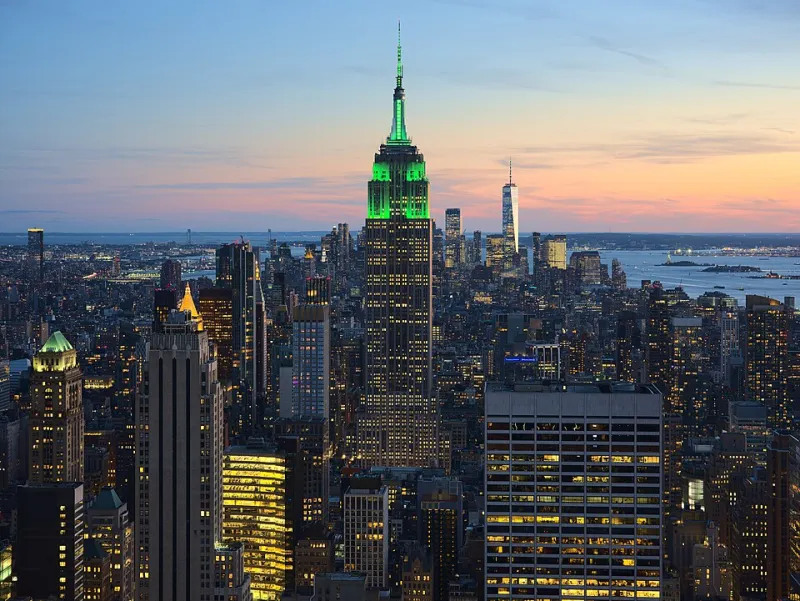
Photo: Dllu, CC BY-SA 4.0, via Wikimedia Commons
It's 6:47 a.m. on a Tuesday, and Miguel has already been behind the counter for two hours. The fluorescent hum overhead competes with a Spanish-language radio station bleeding through a small Bluetooth speaker. A construction worker grabs a coffee and a roll without breaking stride, leaving exact change on the counter. Miguel doesn't look up. He already knew what the guy wanted.
That's the thing about a real bodega. It knows you.
In a downtown Manhattan landscape that has spent the better part of two decades sanding off its own rough edges — replacing laundromats with cryotherapy studios, turning rent-stabilized apartments into boutique hotels — the bodega has somehow held on. Not just as a convenience store. As a cultural institution. As a kind of neighborhood immune system that keeps fighting even when everything around it is giving up.
More Than a Store, Less Than a Monument
Ask anyone who grew up on the Lower East Side or the East Village what they actually miss about the neighborhood, and the answer almost never starts with a restaurant. It starts with a corner store. The one where the owner knew your mom. The one where you could get a two-liter and a scratch ticket and stand outside for twenty minutes without anyone telling you to move along.
Bodegas — the word itself comes from Spanish, loosely meaning a wine shop or pantry — have been a fixture of New York City street life for decades, shaped largely by waves of Puerto Rican, Dominican, and other Latin American immigrants who built small businesses in neighborhoods that larger retailers had long written off. On the LES and into the East Village, these stores became the connective tissue of daily life. They were the places you went before the coffee shops opened and after the bars closed.
"My father opened this place in 1987," says Carlos, who runs a narrow, packed-to-the-rafters store on a side street off Avenue B. "Back then this block was different. People needed us. Now the block is different again, but people still need us — just different people, some of them."
He laughs when he says it, but there's a sharpness underneath.
The Rent Is Too Damn Familiar
The existential threat to the corner store isn't new, but it has intensified. Commercial rents in downtown Manhattan have climbed so aggressively over the past decade that even businesses with loyal customer bases have been forced out. A 2023 report from the New York City Comptroller's office found that small, independent retailers — particularly food and grocery businesses — account for a disproportionate share of commercial vacancies in gentrifying zip codes.
For bodega owners, the math is brutal. Margins on convenience items are thin. A landlord who smells the possibility of a higher-paying tenant — a national chain, a co-working space, another juice bar — has little incentive to renew a lease at rates a family business can absorb.
"Every couple of years I get a letter," says Yolanda, who has run her store near Delancey for over twenty years. "The letter is always very polite. Very professional. It tells me what my new rent would be." She pauses. "I use those letters to prop up the wobbly shelf in the back."
Yolanda's store has adapted without abandoning itself. She added a small hot food section — rice, beans, pernil on weekends — and started selling local hot sauces and a handful of natural snacks alongside the Goya staples. She's not trying to become a gourmet deli. She's trying to stay alive.
What a Bodega Actually Does
The economic function of a bodega is obvious. The social function is harder to quantify, which is probably why city planners consistently undervalue it.
Think about what a corner store actually provides: a place to cash checks in neighborhoods where bank branches are scarce, a spot to leave a key for your neighbor, a reliable face in a city that can feel brutally anonymous. During the early months of the COVID-19 pandemic, bodegas were among the only retail operations that stayed open across the five boroughs — often at significant personal risk to the owners and their families — because the neighborhoods they served had nowhere else to go.
"People would come in just to talk," remembers Domingo, who runs a store on Clinton Street. "Not to buy anything. Just to see another human being. I didn't chase anyone out."
That kind of informal social infrastructure doesn't show up in any economic impact study. But remove it, and you feel the absence immediately.
The Cat, the Cooler, and the Regulars
There's a reason the bodega cat became a full-blown internet phenomenon — and it's not just because cats are inherently compelling content. The bodega cat represents something people are hungry for: specificity, personality, the sense that a place belongs to actual human beings rather than a brand guidelines document.
The best bodegas in downtown NYC are, in their own way, deeply curated spaces. The particular arrangement of chips and motor oil and prayer candles and phone chargers. The handwritten signs. The specific playlist. The owner who will tell you, unprompted, that you look tired and you should eat something.
This is not an aesthetic that can be manufactured. Every attempt to create a "bodega-inspired" retail concept — and there have been several, usually launched by people who grew up nowhere near one — has landed with a thud, because what they're trying to replicate isn't a look. It's a relationship built over years between a family and a block.
Holding the Corner
The bodegas that are making it in 2024 are doing so through a combination of stubbornness, creativity, and deep community roots. Some have leaned into prepared food. Others have become informal gathering spots for specific communities — a bulletin board of local events, a place where a particular language is always spoken. A few have built genuine social media followings, not through marketing strategy but because their regulars started documenting them out of love.
None of them are doing it easily.
"I'm not going anywhere," Carlos says, straightening a row of canned goods that doesn't need straightening. "My kids grew up in this store. My customers' kids grew up in this store. You can't put a price on that."
Actually, a landlord absolutely can. And that's the tension that every one of these owners lives with every single day.
But for now — on a Tuesday morning, with the radio on and the coffee fresh and the door propped open to let in the October air — the bodega holds. And downtown, quietly, is grateful.