Swipe Left: The Downtown Counters That Still Want Your Cash
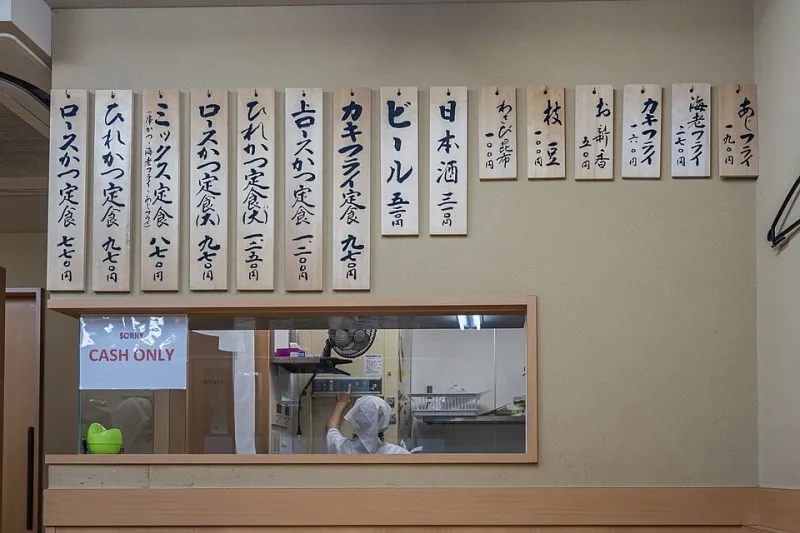
Photo: Wei-Te Wong from Taipei City, Taiwan, Republic of China, CC BY-SA 2.0, via Wikimedia Commons
The barber on Clinton Street has a hand-lettered sign taped to his mirror: CASH ONLY. NO VENMO. NO ZELLE. NO EXCEPTIONS. He put it up, he says, after a customer tried to pay for a haircut by sending money to his daughter's account and then disputed the charge three weeks later. He is 61. He has been cutting hair on that block since before the storefronts across the street were galleries. He is not nostalgic about cash. He is annoyed about fees.
He isn't alone. Walk a few blocks in any direction and you'll find a dumpling counter on Eldridge that takes bills out of a plastic tray, a record shop that runs a card machine only when the owner remembers to charge it, a social club with a coffee can behind the bar, and at least two bars where the bartender's answer to "do you take card?" is a long, unimpressed look.
What the Processing Fee Actually Costs
Let's do the boring math, because the boring math is the whole story. A typical small merchant pays somewhere in the neighborhood of 2.5 to 3.5 percent on every card transaction, plus a per-transaction fee, plus a monthly statement fee, plus a chargeback fee if a customer disputes. On a $20 haircut, that's most of a dollar. On a $4 coffee, the per-transaction fee alone can eat a third of the margin.
Then there's the settlement delay — money that isn't in the account today. And the terminal lease, which for a lot of small operators was signed in a moment of optimism and never renegotiated. Cash doesn't have a settlement delay. Cash doesn't have a chargeback. Cash doesn't send an email in January summarizing your entire revenue history in a spreadsheet that can be subpoenaed, subpoenaed again, or simply lost.
That last point matters more than people admit. For businesses run by immigrants, by people with complicated immigration status in the household, or by anyone who's had a bad experience with institutions, a card terminal is a third party in the room. Cash is quiet.
The Profiles
The dumpling counter. Two women, one steamer, one plastic tray for bills and coins. They've looked at a tablet-based POS system twice. Both times the salesperson explained the dashboard, the analytics, the "insights." Both times they asked how much it costs when a customer disputes a $6 order. Both times they did not buy the tablet. Their line is out the door at noon anyway.
The barber. He does about forty cuts a week. At 3 percent, that's roughly $600 a year in fees, which is not nothing, but he'll tell you the fee isn't the reason. The reason is the chargeback and the fact that he doesn't want a paper trail of every person who sat in his chair.
The record shop. Cards accepted, technically, but only if the owner is in the right mood and the terminal is charged. He'll tell you he's less worried about fees than about the way a card transaction turns a browsing session into a data point. "I don't need to know what you bought last time," he says. "I'd rather you remember."
The social club. Coffee can. No further comment. Members only.
What You Gain, What You Lose
If you're the customer, cash-only is a small tax. You either carry bills or you pay the $3.50 surcharge at the bodega ATM, which exists precisely because the cash-only economy creates demand for it. That surcharge is the hidden cost of the whole arrangement, and it lands hardest on people who don't have a card to begin with or who are living paycheck to paycheck and don't want to leave a cash trail.
And there's a real exclusion problem. A tourist with no cash, a teenager with a debit card and an app, a person with a disability who can't easily detour to an ATM — all of them get turned away at the counter. The romance of the cash box has a downside, and the downside is that it makes a place legible only to people who already know the rules.
Worth noting: New York City has a rule on the books barring most retail establishments from refusing cash, though the scope and enforcement have always been fuzzy, and plenty of small operators either don't know about it or don't care. It's a rule that was written with the best intentions and quickly became a symbol of how hard it is to legislate around small business reality.
Why the Disappearance Would Matter
The cash-only holdouts are, almost by definition, the businesses with the thinnest margins and the oldest leases. They're the ones that can't afford to be packaged. The moment a place gets a card reader, a POS dashboard, and a merchant account, it becomes legible to a whole apparatus — franchising consultants, small-business lenders, the people who build brands out of neighborhood texture. Legibility isn't evil. But legibility is how a counter becomes a concept, and how a concept becomes a rent increase.
So yes, carry cash downtown. Not out of nostalgia. Out of the simple understanding that the plastic tray under the register is one of the last pieces of the neighborhood that hasn't been turned into a dashboard yet.