Month-to-Month Forever: The Downtown Businesses Living on Borrowed Time

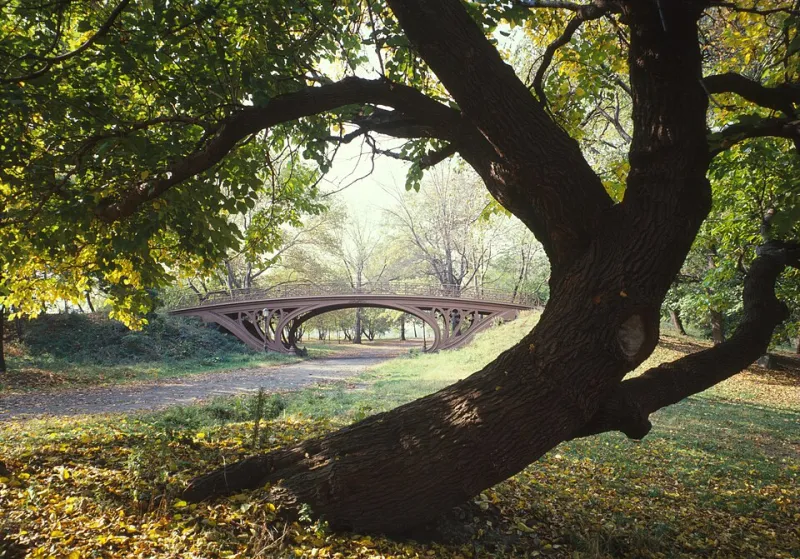
Photo by Photo by Daulet Rakhymzhan on Unsplash on Unsplash
The sign in the window of a certain Orchard Street vintage shop hasn't changed in three years. Neither has the rent — at least not officially. The owner, who asked not to be named because she's still technically negotiating with her landlord's property management company, has been operating without a valid lease since the spring of 2022. Her original ten-year agreement lapsed. Renewal talks started, stalled, restarted, and then just... stopped. Nobody came to collect. Nobody sent a termination notice. So she kept opening the store every morning, kept paying what she'd always paid, and kept waiting for a call that hasn't come.
"At some point you just stop holding your breath," she says, straightening a rack of 90s leather jackets. "This is New York. The threat is always there. You just learn to work around it."
She is not alone.
The Expiration Nobody Enforced
Across the Lower East Side — and increasingly throughout downtown Manhattan — a strange and underreported phenomenon has taken hold. Businesses are operating in legal gray zones created by expired leases, absentee landlords, stalled negotiations, and a commercial real estate market that has been in a state of slow-motion dysfunction since the pandemic reshuffled everything. Some of these operators are paying rent, some are not. Some have heard from their landlords in months, others haven't spoken to a human owner in years — just the occasional automated invoice from a management company with a generic email address and a 1-800 number that puts you on hold.
New York State law does offer some protection here. When a commercial lease expires and both parties continue operating as if it's still in effect — tenant pays, landlord accepts — it typically converts to a month-to-month tenancy. That sounds stable. It isn't. Month-to-month means either party can end the arrangement with relatively short notice. For a business that's sunk years of work and capital into a space, that's an eviction notice waiting to happen at any moment.
But here's the twist: for many landlords, especially those holding onto properties as long-term investments or waiting for a rezoning opportunity, the math sometimes works in the tenant's favor. A vacant storefront generates no income and costs money to maintain. A paying tenant — even one technically operating without a formal agreement — keeps the lights on and the property from falling into disrepair. So the standoff continues.
The Accidental Institutions
What makes this more than a dry legal story is what these businesses have become in the meantime. Some of the most beloved spots on the LES right now — a record shop on Ludlow, a ceramics studio near Essex Market, a Dominican lunch counter that's been feeding the block since before most of its current customers were born — are operating under these exact conditions. They've become, almost accidentally, monuments to a neighborhood that refuses to fully gentrify on schedule.
Rafael Ortega has run a small frame shop and art supply store on Rivington for eleven years. His lease expired fourteen months ago. He's sent two letters to the address listed on his original lease. One came back. The other didn't. He found out through a city property database that his building changed hands eighteen months ago as part of a larger portfolio sale. The new owners have never introduced themselves.
"I pay into an account. The money clears. Nobody calls," he says. "I don't know if that means I'm fine or if I'm about to get a marshal's notice."
He's consulted a lawyer who told him what he already knew: he's in a valid tenancy, technically, but one that could be terminated with 30 days' notice. He's also invested in new inventory, repainted the front, and hired a part-time assistant. Because what else are you going to do?
When Eviction Becomes Background Noise
There's a particular kind of psychological adaptation that happens when you live or work in New York long enough under economic precarity. The threat doesn't disappear — it just gets absorbed into the texture of daily life. Longtime downtown business owners describe a state of low-grade alertness that never fully resolves. You're not panicking. You're not at peace. You're just operating.
That adaptation has real consequences. Businesses in legal limbo often can't access certain small business loans that require proof of a valid lease. They can't commit to long-term vendor contracts. They sometimes can't get insurance riders that require documentation of tenancy status. The uncertainty calcifies into a kind of institutional fragility — these places keep running, but they can't fully grow.
And when they do eventually close — whether by eviction, by choice, or by the slow erosion of a business that couldn't plan ahead — the neighborhood loses something it didn't even know was at risk, because nobody was tracking it.
The System Isn't Broken. It Was Built This Way.
It would be convenient to frame this as a failure of the system. But that implies the system was ever designed to protect these businesses in the first place. Commercial tenants in New York have dramatically fewer protections than residential ones. There's no commercial rent stabilization (though advocates have been pushing for it for years). There's no mandatory renewal. There's no requirement that a landlord even respond to a lease renewal request within any particular timeframe.
What exists instead is a power imbalance so entrenched that many small business owners have simply stopped expecting anything different. They negotiate when they can, go month-to-month when they must, and hold on as long as the math — and the goodwill of whoever owns the building this month — allows.
"I've been here long enough to watch four different businesses open and close in the space across the street," says the owner of the Orchard Street vintage shop. "None of them did anything wrong. They just ran out of runway."
She pauses, straightens another jacket.
"I'm still here. I don't know why. I don't know for how long. But I'm here."
What Comes Next
City Council members representing downtown districts have periodically introduced legislation aimed at giving commercial tenants more stability — mandatory lease renewal rights, longer notice periods, mediation requirements before eviction proceedings. None have passed in comprehensive form. The real estate lobby is well-funded and politically connected. Small business owners, especially those already operating in legal gray zones, often can't afford to be publicly vocal advocates for fear of drawing attention to their own tenuous situations.
So the standoff continues. The record shops and frame stores and lunch counters stay open. The landlords — present or absent, corporate or individual — let the rent roll in or wait for the moment the numbers change. And the neighborhood holds its shape, not because anyone planned it that way, but because the machinery of displacement occasionally jams, and in that jam, something worth keeping manages to survive.
For now.